The open source tool teaching AI agents to 'write less', ponytail
ponytail is an open source tool that teaches AI coding agents YAGNI-based minimalism. Benchmarks show 54% fewer LOC, 22% fewer tokens, and maintained safety, with install guides and tunable commands.
A lightweight senior plugin for AI agents
As of September 5, 2026, a repository gaining 1,683 stars in a single day on GitHub Trending is worth noting. DietrichGebert/ponytail is an open source project that, within about three months of its first commit on June 12, has accumulated roughly 126.2k clones and more than 6,800 forks. Its tagline: "the best code is the code you don't write."
ponytail injects tone and style into AI coding agents such as Claude Code, Codex, and Cursor so they behave like the most lightweight senior developer in the room. If a file exceeds about 50 lines, it quietly trims it down overnight. It pushes back against things agents like to add just because they can: frameworks, helpers, and polish that aren't actually needed.
The before/after examples are direct. When asked for a date picker, an agent might start installing a date library; with ponytail in the loop, the result is simply this:
<!-- ponytail: browser has one -->
<input type="date">
More examples are available in the README's before/after section.
A ladder that stops at the first valid step
ponytail's core is a YAGNI (You Aren't Gonna Need It) ladder. Before writing code, the agent walks through these seven steps and stops at the first one that holds.
1. Does it need to exist at all?         → no, use the simpler version (YAGNI)
2. Is it already in this codebase?       → reuse it instead of rewriting
3. Is there a standard library option?   → use it
4. Is there a native capability?         → replace the deep dependency with <input type="date">
5. Is it already an installed dependency? → do not add a new one
6. Can it be one line?                   → one line
7. Only then: the smallest working code
The point of the ladder is understanding the problem before changing anything. It tells the agent to read the code it wants to change first and actively inspect the actual flow before editing. As the README puts it: "teammates may leave your side, but readers should not be left stranded."
Benchmarks in practice
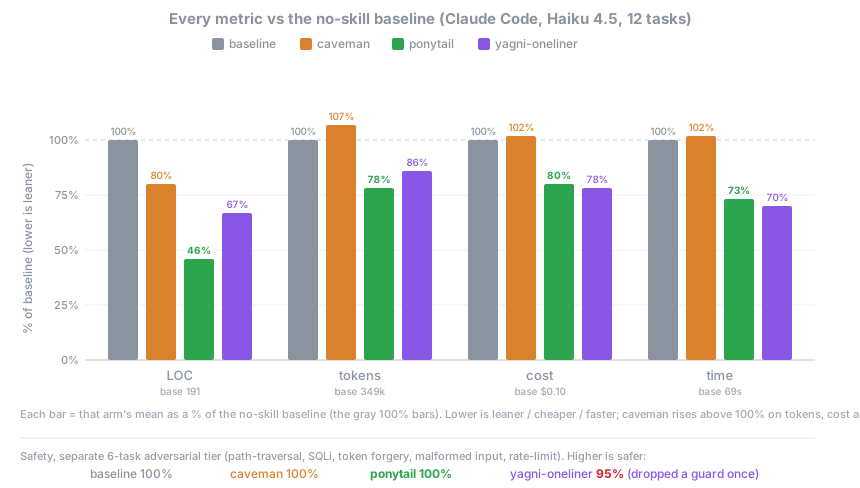
The author published what they call an "honest agentic benchmark". Using headless Claude Code sessions on the tiangolo/full-stack-fastapi-template FastAPI+React repository, they measured added git diff lines across 12 feature tasks (n=4, Haiku 4.5), comparing against a stackless agent baseline.
 Source: © 2026 DietrichGebert
Image: DietrichGebert/ponytail (commit 9cc65d03aa2d) · © 2026 DietrichGebert · MIT · unmodified
| method | LOC | tokens | cost | time | safety |
|---|---|---|---|---|---|
| ponytail | -54% | -22% | -20% | -27% | 100% |
| caveman(concise doc comparator) | -20% | +7% | +3% | +2% | 100% |
| "YAGNI + one-liner" prompt | -33% | -14% | -21% | -30% | 95% |
The conclusion is sharp: ponytail is the only method that captures every metric at once and the only one that maintains 100% safety. caveman reduces code but actually increases tokens (+7%), while the one-liner prompt is cheap and fast but loses safety, falling to 95%.
Reduction rates vary by task. The gains are dramatic where native replacements exist: date picker 404 lines -> 23 lines, color picker 287 lines -> 23 lines, file dropdown 251 lines -> 95 lines. For already-minimal code like standard CRUD endpoints, all methods converge.
The -54% result is an average. The accurate conclusion is: "reduce bloat where it exists; leave minimal code as is."
There is drama behind the benchmark too. The original repository reported 80-94% under a single-call baseline, but issue #126 argued that baseline was inflated by benchmark shortcuts. The table above uses a revised baseline of "stackless real agentic sessions".
The author now states that "80-94% is baseline variance in wrapper benchmarks", and frames the honest claim as: "where there is bloat, reduce thoughtfully; where there is none, expect no effect but do not sacrifice safety." The benchmark artifact is public and reproducible.
The minimum viable safety line
The key idea is not "save tokens"; it is "use only what the task needs, and don't quietly drop validation, error handling, assurance, or accessibility". The difference is clearest in safety tasks around path traversal, SQL injection, and privilege tokens.
On a safe-path task, a one-liner prompt was the easiest to write but failed 1 in 4 attempts by allowing ../../ directory traversal. ponytail produced 9.5 lines and was 4/4 safe; the extra 3 lines were path traversal checks.
The line between "wrote less" and "got pwned" is exactly that validation boundary.
Installation across 20+ agents
Major integrations include:
- Claude Code: run
/plugin marketplace add DietrichGebert/ponytail, then/plugin install ponytail@ponytail - Codex:
codex plugin marketplace add+codex plugin add - Gemini/Antigravity CLI:
gemini extensions install https://github.com/DietrichGebert/ponytailoragy plugin install - OpenCode: register
@dietrichgebert/ponytailinopencode.json - Hermes Agent:
hermes plugins install DietrichGebert/ponytail --enable, then restart - OpenClaw:
clawhub install ponytail
The install section documents 20+ agent-specific instructions. Editors without plugin systems, such as Cursor, Windsurf, Cline, Copilot Chat, Kiro, and Zed, work by copying rule files like .cursor/rules/ or AGENTS.md from this repository.
It also works without a config file. PONYTAIL_DEFAULT_MODE or an optional config file can set the default strength.
Tunable intensity through commands
Composable intensity commands are provided in-repo. /ponytail lite|full|ultra|off controls aggressiveness. /ponytail-review reviews the current diff, /ponytail-audit audits the whole repo, and /ponytail-debt collects deferred cleanup items into a ledger.
lite means "tell me only what I need in the simplest way"; ultra means "push one-liner output while challenging hidden requirements". Adding ponytail: markers in prompts lets you collect "tech debt" later with /ponytail-debt.
The command reference shows deliberate design between economy and completeness.
What practitioners should take away
On the surface, this looks like a simple aesthetic about fewer lines of code. What actually matters is an empirically measured benchmark, plus safety-aware design that keeps validation, assurance, and accessibility separate from line-count reduction. The limitations are documented.
The benchmark uses a single model, Haiku 4.5. The author also notes that "one-liner prompts may lose safety often" and that "token-frugal prompts may backfire on models that naturally write more tokens, such as GPT-5.5".
This notion of "lightweight" is not about shorter diffs. It is about removing duplicate code by maximizing native capabilities and standard libraries. Under the MIT license, it can be used or modified freely. Getting started is straightforward at ponytail.dev.
References
Related posts
'agent-comms' — A New Protocol for AI Coding Agents to Collaborate Across Sessions and Machines
The chronic ailment of AI coding agents whose memory resets when you close a session. The open-source 'agent-comms' proposes the AHRP protocol, bundling work context into capsules to hand off to other sessions and other computers, and even supporting real-time collaboration over a WebSocket mesh. We dug into this fledgling project that made waves on Hacker News.
Open-Source YuE2: White-Box Music Generation Rivaling Suno
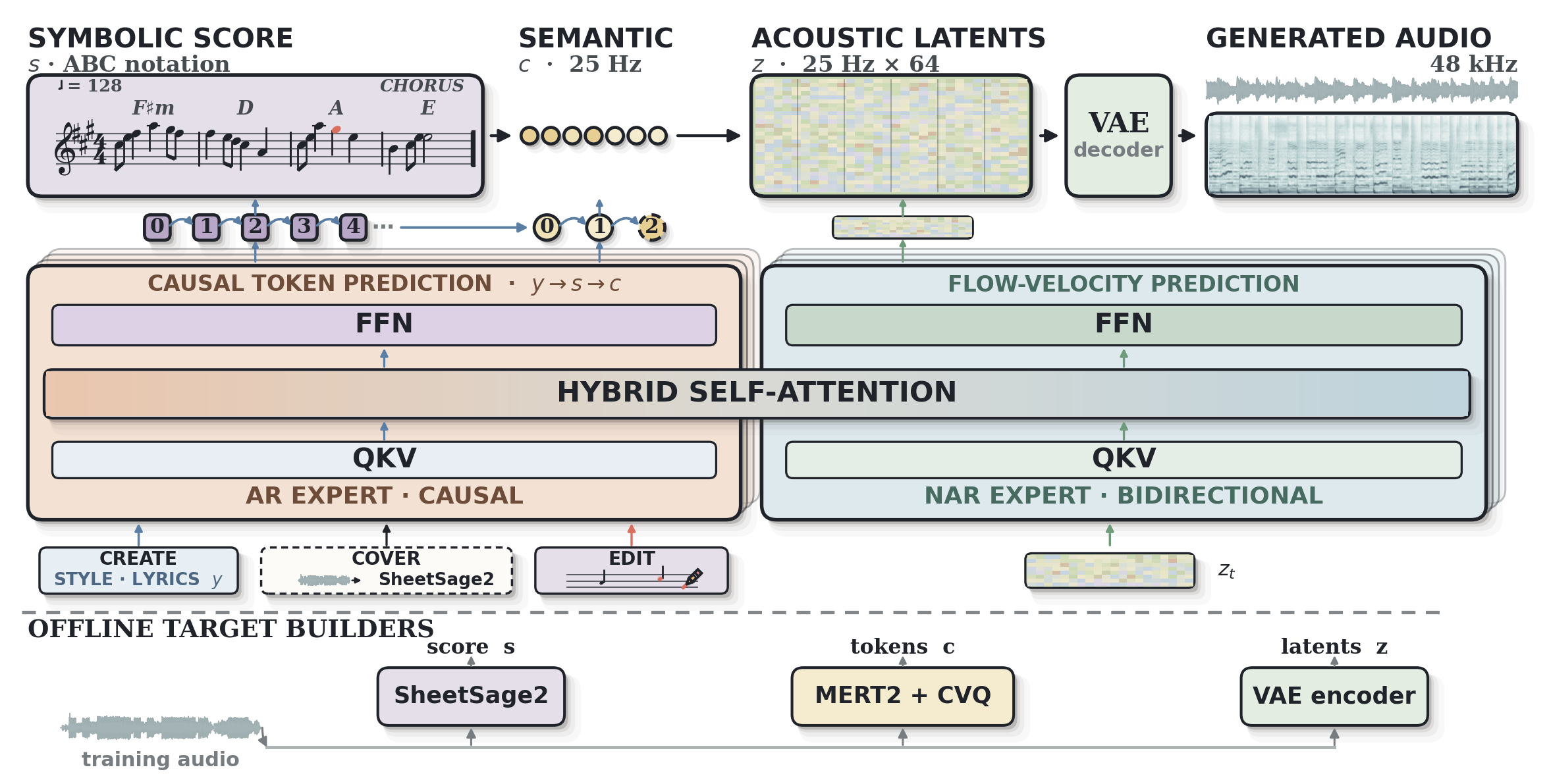
Open-source YuE2 makes the melody and chord scores it produces via symbolic planning editable. It posts scores that compete with Suno on WildSongBench, while its center of gravity stays open — code under Apache 2.0 and the model under CC BY-NC 4.0.
Comparing 3 Browser Automation Tools
A draft comparing Playwright, Selenium, and Browser Use on the same criteria to organize what to choose in which situation. Broken down from a practical standpoint across AI-agent automation, traditional E2E testing, and legacy browser compatibility.
Written by AI from public sources; numbers and claims are checked against those sources before publishing.