OpenAI backs Ukrainian press with AI newsroom program
OpenAI partnered with WAN-IFRA and AIRPPU to launch an AI support program for Ukrainian independent newsrooms, with Newsroom AI Masterclass and Newsroom AI Catalyst plus API credits.
AI support program launches for Ukrainian independent press
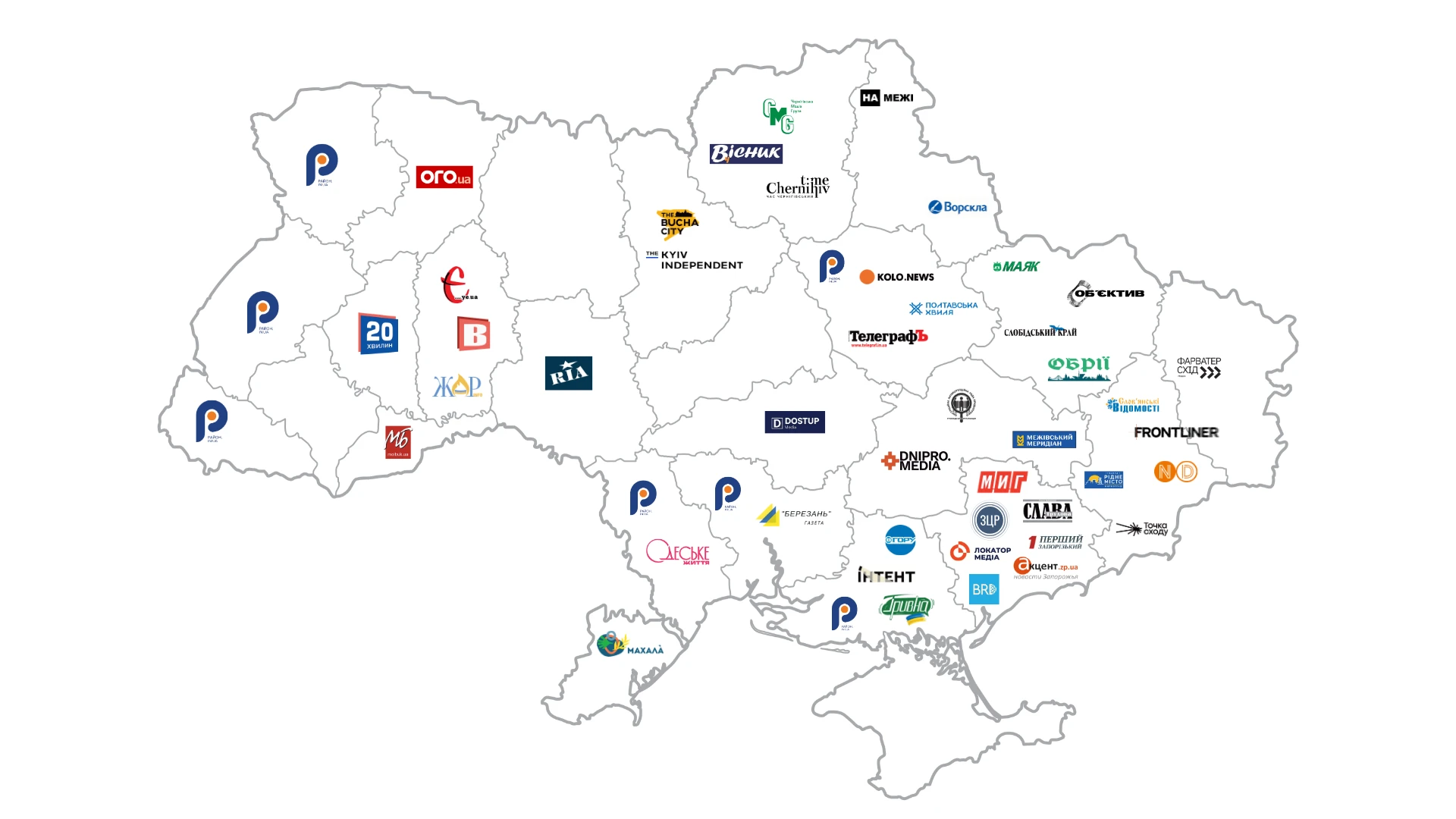
OpenAI announced a partnership with WAN-IFRA and the Association of International Press and Information Agencies of Ukraine (AIRPPU) on September 7, 2026. The initiative aims to enhance the sustainability and efficiency of Ukrainian independent media outlets through AI programs amid the ongoing war. This announcement comes as OpenAI expands from global mainstream media and big tech into smaller regional markets, with Ukraine representing a key shift in that geographic focus.
Why Ukrainian independent press now
Following Russia's full-scale invasion in February 2022, the operating environment for Ukrainian regional media has changed dramatically. Infrastructure destruction, power outages, security threats, and staff displacement have undermined outlets' ability to transmit information. WAN-IFRA notes that independent media remain simple carriers of verified information and highlight Ukrainian journalists' role in directly delivering truth to the public. Therefore, this support goes beyond simple technology transfer and emphasizes strengthening newsroom sustainability.
 Source: OpenAI announcement
Program structure
This program comes in two forms. Newsroom AI Masterclass Series is an educational series where national and professional journalists gather in small teams to complete hands-on workshops, volunteer participation, product development, fact-checking, organizational transformation, and other challenging newsroom tasks. This is particularly notable as a continuation of programs previously run by WAN-IFRA and OpenAI.
Newsroom AI Catalyst provides hands-on operational support to ten selected Ukrainian news organizations. Each organization builds use cases with high impact, advances implementation roadmaps, and runs actual newsroom AI pilot projects tailored to their environment. As the name suggests, it plays the dual role of accelerating education content into actual newsroom operations. OpenAI API credits are also provided to all participating organizations, creating opportunities for direct newsroom AI development.
The program schedule is already set. The Newsroom AI Masterclass Series began on August 5, 2026, and Newsroom AI Catalyst opens for applications on September 17, 2026. Therefore, this announcement comes at a critical timing as the entire program is beginning to scale.
Who plays what role
The reason this program gains weight is that each stakeholder's role is clearly defined.
| Stakeholder | Role |
|---|---|
| OpenAI | AI technology·API credit provision, sharing risk and rewards with global news organizations |
| WAN-IFRA | Global press association supporting Ukrainian media since 2022, program design and international expert networking |
| AIRPPU | Ukraine's maximum regional·local media network, participant selection and current demand collection |
Each stakeholder handles technology, global network, and local network respectively. Particularly, AIRPPU's Ochrobot and Brovko stated: 'We are creating a new generation of Ukrainian and independent media without preconditions,' and evaluated that AI strengthens editorial work and gives journalists more time for high-quality work. OpenAI's raw text·knowledge asset deployment also plays an important role in enabling regional media to quickly deliver information in the pre- and post-war contexts, and this program is expected to contribute to building a more resilient independent media ecosystem.
Why this program is questionable
On the surface, it is 'journalist AI education,' but there is more at stake in this case.
AI support trends are changing. Rather than simply subsidizing pilots or offering only free credits, education·mentoring·roadmap guidance·pilot operation processes have been designed, representing a shift from technology distribution to capability building. This is meaningful for regional media in conflict·post-conflict·developing areas.
From the perspective of personal information and source protection, there is also significance. Ukrainian independent media are key actors in fact-checking and source protection during the war. If AI improves the efficiency of such organizations, it can also help prevent incorrect information from spreading systematically.
What is also interesting from the perspective of the Korean news industry. While domestic newsrooms are expanding AI adoption and promoting workflow innovation with fact-checking models, the approach of building AI use cases based on the priority of fact-checking·source reliability·production efficiency in editorial operations aligns with what is happening globally and is applicable even to small media organizations.
Conclusion and points to consider
Clear and concrete results are not yet visible. The 10 selected institutions, credit terms, and pilot project sustainability have not been disclosed, and uncertainty in execution remains as the war situation continues. The concern is that after the Catalyst phase, 'support continues until objectives are met, and benchmarks are set,' so further announcements should follow. Still, this program that combines technology, global networks, and local networks for Ukrainian independent press sustainability is a promising blueprint for future regional media and AI.
Related posts
Hardening LLM gateways: in-process resilience with vernLLM
vernLLM on Show HN embeds rate limiting, circuit breaking, and backoff into application code to replace an external LLM gateway. We assess its operational impact in API-heavy services.
 News
News딥마인드, 날씨 AI 모델 WeatherNext 3 공개…1시간 갱신·5km 고해상도
Google DeepMind가 WeatherNext 3를 공개했다. 실시간 위성 데이터를 활용해 1시간 단위로 5km 해상도 예측을 제공하고, 강수 정확도는 최대 60% 개선됐다. Search·Gemini·Maps·Cloud에 적용된다.
 News
NewsLegora·GPT-6 Astra, 재무 검토 정확도 40% 높였다
OpenAI가 공개한 스타트업 사례에서 Legora가 GPT-6 Astra를 재무제표 tie-out 검토에 적용했어요. 41개 문서를 단일 Agent 실행으로 몇 분 만에 검토하고 심은 4개 오류를 모두 찾아냈으며, 재무 워크플로 성능도 약 40% 올랐다고 보고했어요. 전문가의 최종 판단을 유지하는 human-in-the-loop 구조가 확장의 핵심이에요.
Curated, fact-checked, and edited by a single operator before publishing.